The Importance of Futsal: Benefits, Skills and Rules
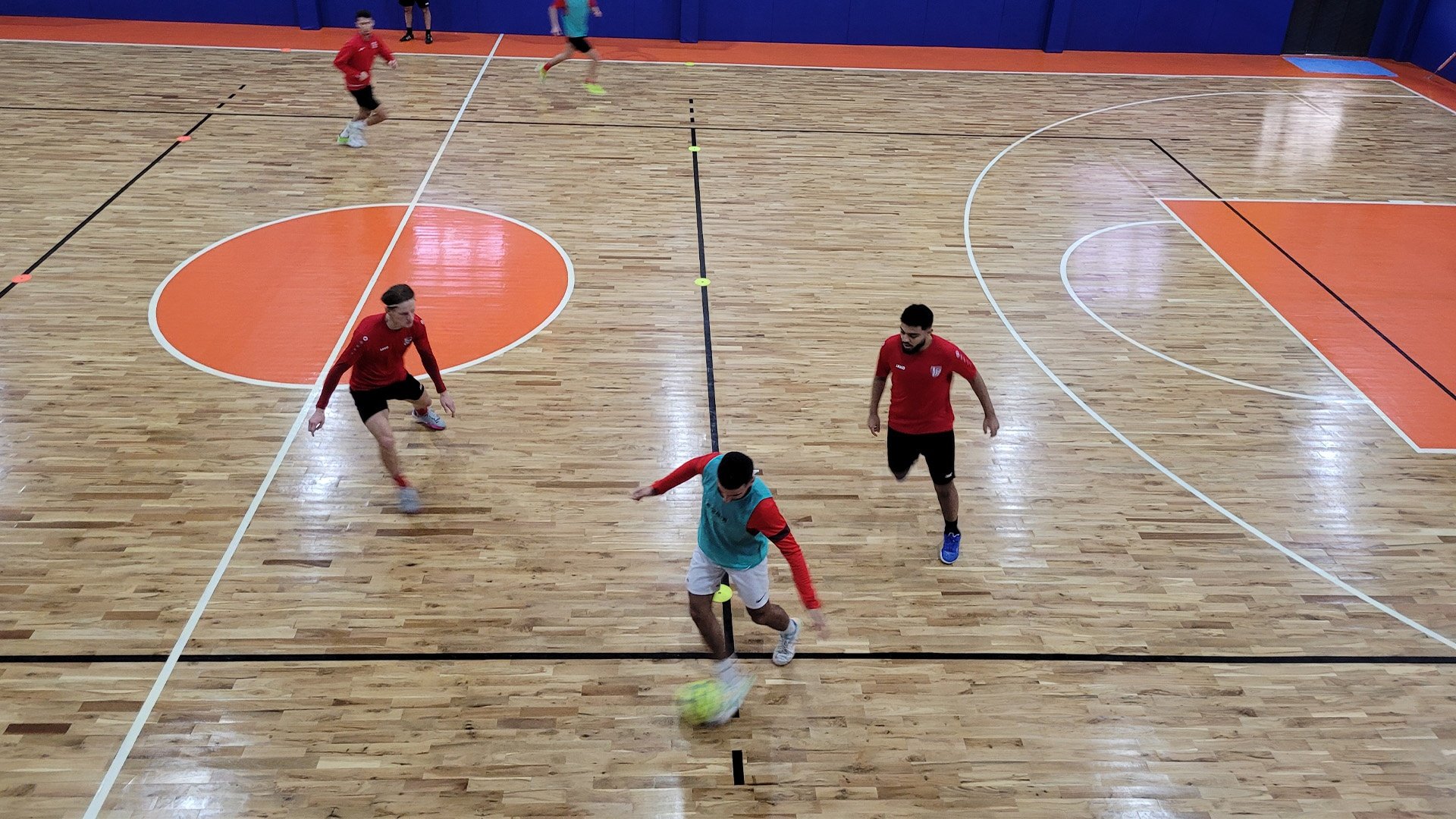
Futsal is more than a smaller version of football. Its restricted playing area, fast rhythm and constant pressure create a training environment in which players must think, move and execute technical actions quickly.
Futsal Training and Player Development
The Importance of Futsal: How It Develops Smarter and More Technical Football Players
For young players, academies and professional teams, futsal can be an effective way to develop close ball control, decision-making, positional awareness, creativity and confidence. These abilities can also support performance in outdoor football.
What Is Futsal?
Futsal is a recognised form of indoor football played by two teams of five players, including the goalkeeper. It is normally played on a hard, flat court with touchlines rather than walls.
The futsal ball is smaller and has a reduced bounce compared with a standard outdoor football. These characteristics make it easier to control on a hard surface and encourage passes and technical combinations along the ground.
The name “futsal” is derived from expressions meaning indoor or hall football, including the Spanish terms fútbol sala and fútbol de salón. Today, futsal is played internationally by clubs, schools, academies and national teams.
Why Is Futsal Important?
Futsal is important because it places players in situations that demand regular technical involvement and rapid problem-solving. The smaller court means that defenders are usually close, passing lanes can disappear quickly and every player must contribute in both attack and defence.
A player receiving the ball may have only a moment to decide whether to pass, dribble, shoot, protect possession or move the ball into another area. This repeated process can help players become more comfortable under pressure.
Futsal does not automatically make every participant a successful outdoor footballer. Physical preparation, tactical education, coaching quality and experience on a full-sized pitch remain important. However, futsal can provide a strong technical and cognitive foundation for football development.
Ten Benefits of Playing Futsal
More Frequent Ball Involvement
With fewer players and a smaller playing area, each participant becomes involved in more attacking and defensive situations. Players receive, pass, protect and challenge for the ball repeatedly.
Faster Decision-Making
Limited time and space require players to assess their options quickly. They learn to recognise pressure, identify teammates and choose an appropriate action before possession is lost.
Better Close Control
Futsal encourages short touches, controlled turns, sole-of-the-foot techniques and precise changes of direction. These skills are useful when receiving the ball in crowded areas.
Improved Passing Accuracy
Short combinations are central to futsal. Players practise the timing, direction and weight of their passes while learning how to create useful passing angles.
Stronger Movement Without the Ball
Players cannot remain static after passing. Supporting runs, rotations, overlaps and changes of position are necessary to maintain possession and open space.
Greater Tactical Awareness
Because transitions occur quickly, players must recognise when to attack, recover, press or protect the centre. Small positional errors are often punished immediately.
Increased Creativity
Tight situations encourage players to experiment with feints, combinations, disguised passes and unexpected solutions. Creativity becomes practical because players must find ways through compact defensive structures.
Better Defensive Discipline
Futsal players learn to stay balanced, control passing lanes, communicate and defend without being drawn unnecessarily out of position.
Improved Fitness and Repeated Effort
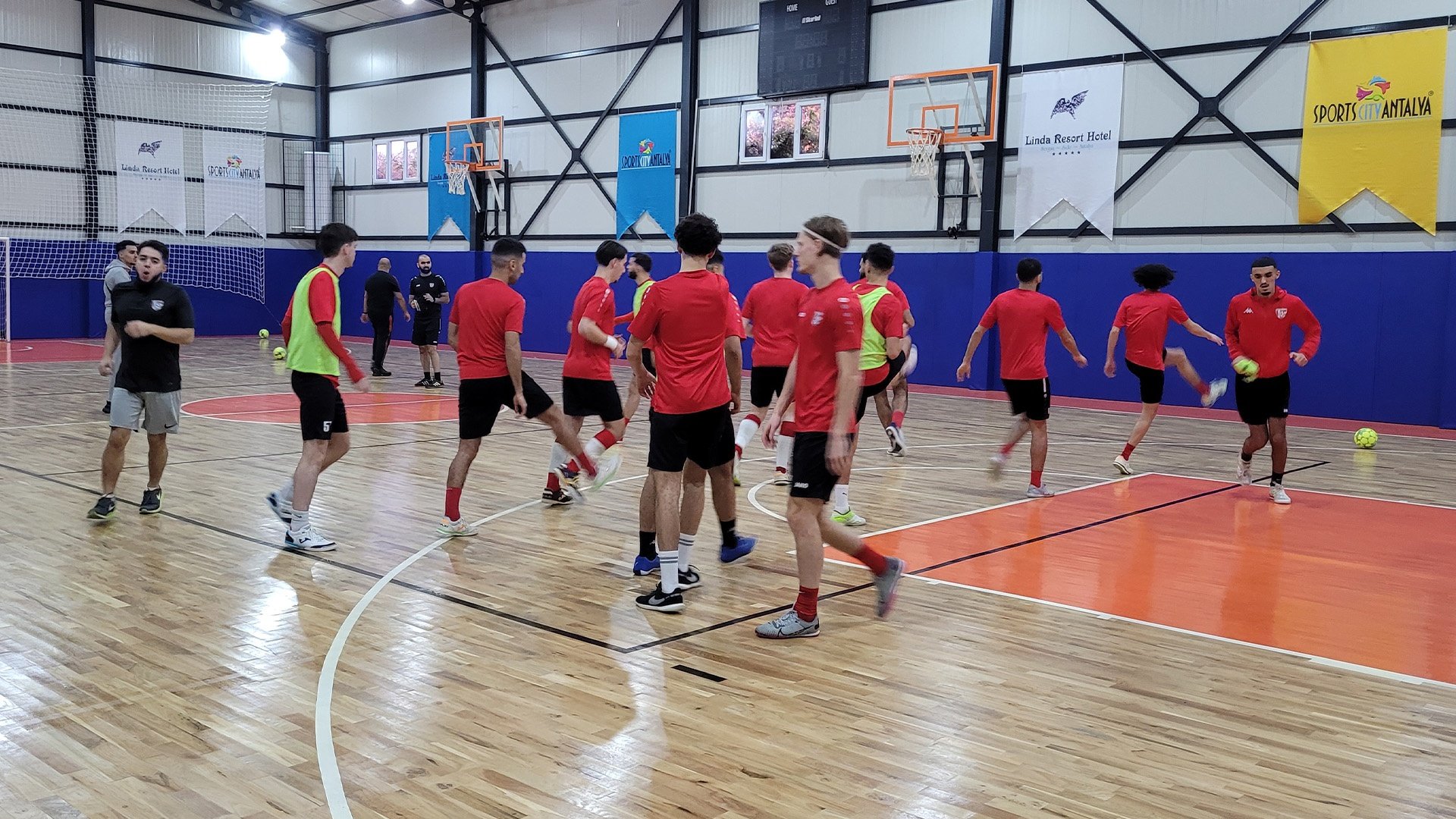
The game includes frequent accelerations, stops, changes of direction and transitions. A properly managed futsal session can support agility, coordination and repeated high-intensity effort.
Enjoyable Technical Development
Futsal combines competition with regular involvement. Players spend less time waiting for the ball and more time participating in meaningful game situations.
How Futsal Develops Football Intelligence
Football intelligence is the ability to understand a developing situation and select an effective response. It includes perception, anticipation, decision-making, positioning and execution.
Futsal can develop these qualities through repeated, rapid game situations. Before receiving the ball, a player should observe:
- where the nearest defender is positioned;
- which passing lanes are open;
- where supporting teammates are moving;
- whether space is available for a turn or dribble;
- how quickly the team must react after losing possession.
As players experience these situations repeatedly, they can begin to recognise common patterns. The objective is not simply to react faster, but to understand the game earlier.
The Four-Second Rule and Speed of Thought
Many futsal restarts must be taken within four seconds after the team is ready and the referee begins the count. This rule discourages unnecessary delays and requires players to organise themselves quickly.
Teammates must immediately create angles and movement options. The player taking the restart must scan the court, evaluate the available choices and execute the action without hesitation.
Does Futsal Improve Outdoor Football Performance?
Futsal and eleven-a-side football are different sports, but several futsal abilities are transferable to the outdoor game.
Players who regularly train in futsal may become more comfortable when:
- receiving the ball under pressure;
- playing in central or congested areas;
- combining through short passes;
- turning away from an opponent;
- reacting immediately after losing possession;
- making decisions close to goal;
- using both feet in fast situations.
The larger outdoor pitch introduces additional requirements such as longer passes, aerial play, greater running distances and different tactical structures. For this reason, futsal should complement rather than completely replace outdoor football training.
Why Futsal Is Valuable for Young Players
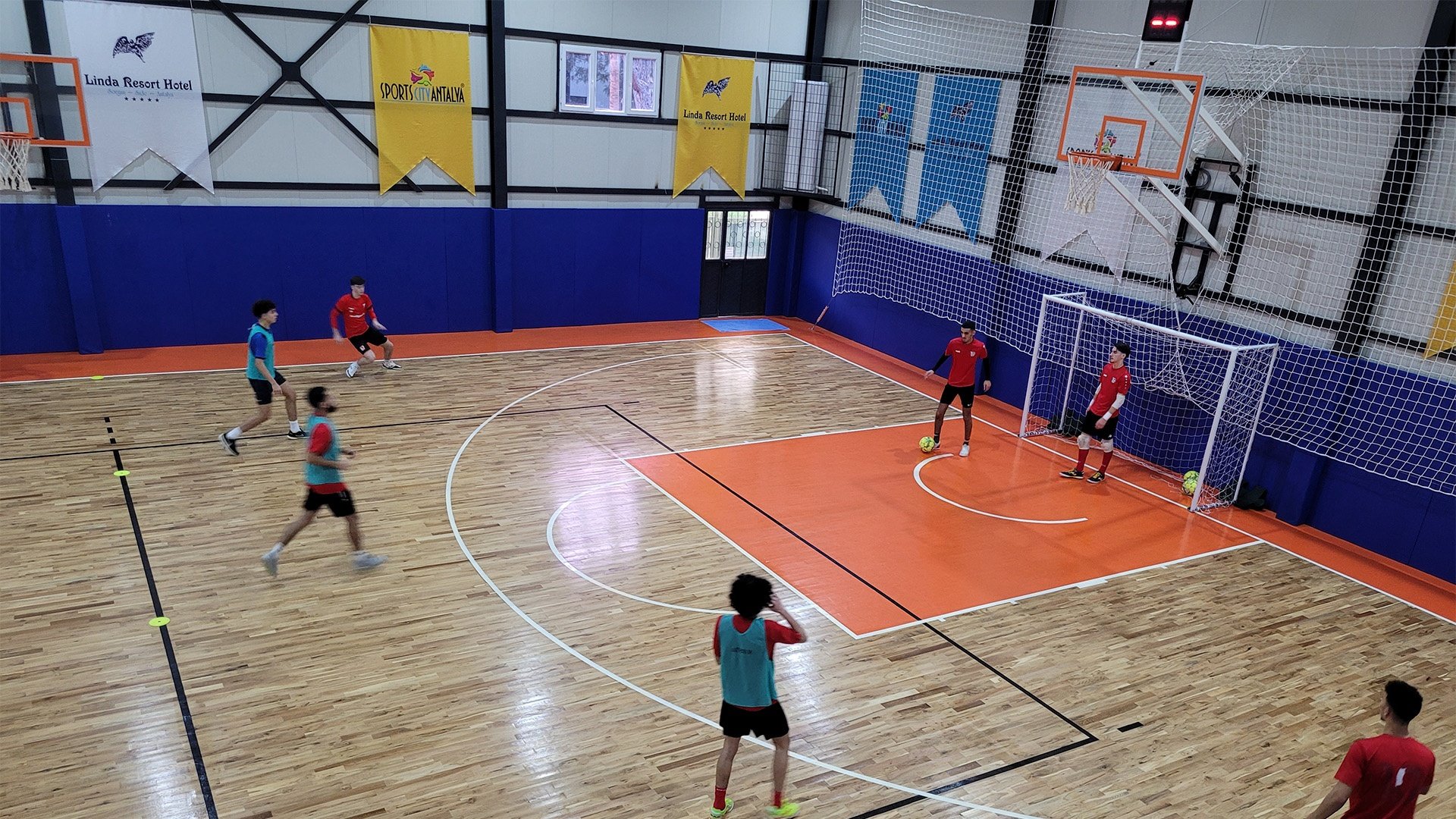
Youth players need meaningful contact with the ball. In an appropriate coaching environment, futsal gives children repeated opportunities to solve problems, communicate and take responsibility during play.
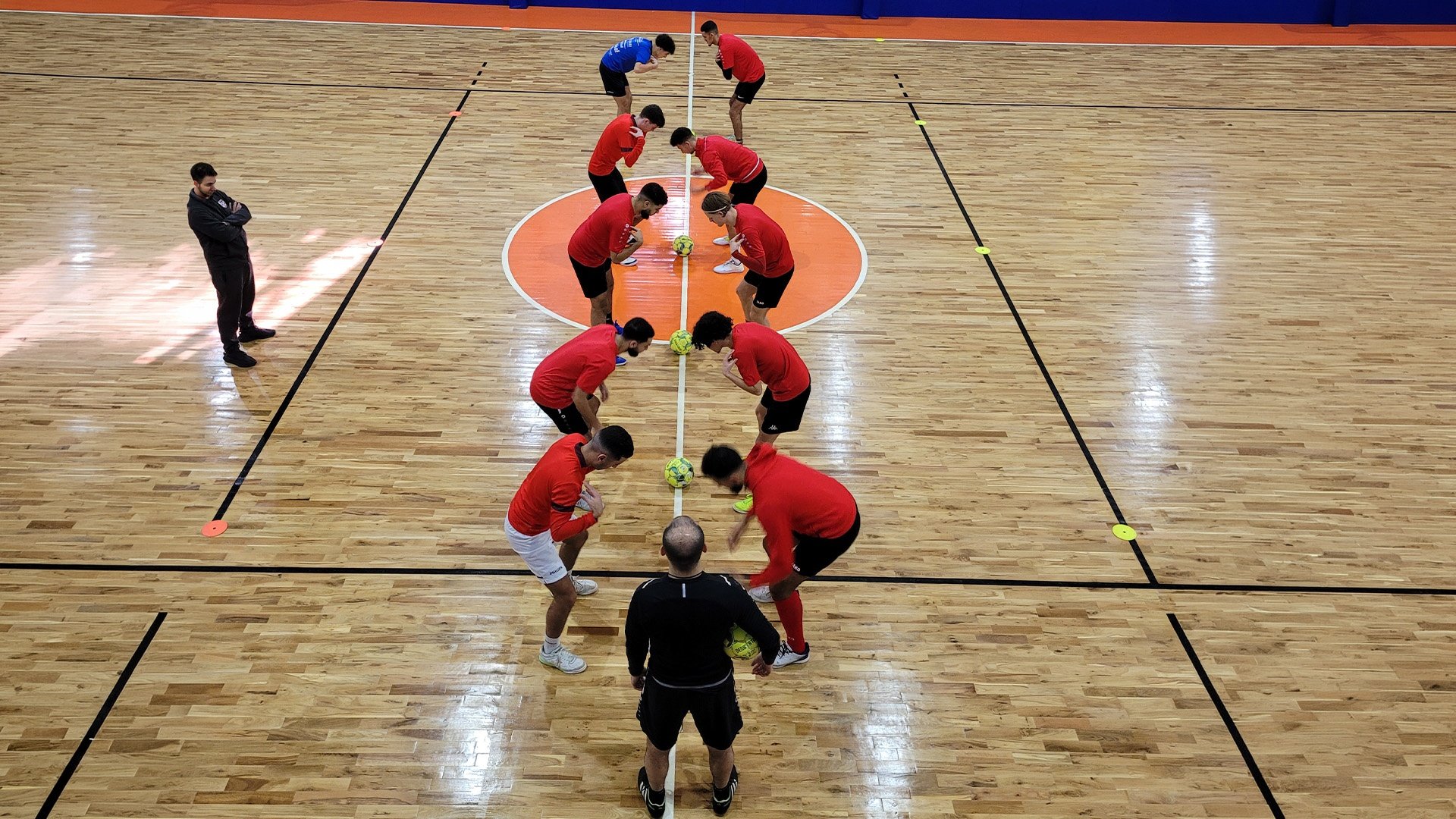
Coaches can use small-sided futsal exercises to teach scanning, body position, support angles, passing quality, defensive recovery and transition behaviour. Sessions should remain suitable for the players’ age, experience and physical development.
Main Futsal Rules Explained
Competition regulations can vary by age group, level and organising body. The following overview describes several widely used features of futsal. Teams should always check the regulations of their specific competition.
Number of Players
Each team has five players on the court, one of whom is the goalkeeper.
Unlimited Substitutions
Futsal generally permits unlimited substitutions. Players may leave and return during the match, provided substitutions are completed correctly through the designated substitution zone.
Match Duration
A standard senior match consists of two periods of 20 minutes of effective playing time. The match clock is stopped when the ball is out of play or play is interrupted.
Time-Outs
Each team is generally entitled to one one-minute time-out during each period.
The Four-Second Rule
Kick-ins, corner kicks, certain free kicks and goalkeeper clearances must generally be completed within four seconds once the conditions for the restart are satisfied.
Kick-Ins Instead of Throw-Ins
When the ball crosses the touchline, play is restarted with a kick-in rather than a throw-in. The ball must be stationary and correctly positioned for the restart.
Five-Metre Distance
Opposing players must generally remain at least five metres from the ball at specified restarts, including kick-ins, corner kicks and free kicks.
Accumulated Fouls
Direct free-kick offences are recorded as accumulated fouls during each period. Beginning with the sixth accumulated foul by a team in the same period, the opposing team may receive a direct free kick without a defensive wall.
Red Cards and Numerical Disadvantage
A player who is sent off cannot continue participating. The team normally plays with one fewer player for up to two minutes. The replacement timing can be affected by a goal and by the number of players on each team.
Goalkeeper Rules
The goalkeeper may participate outside the penalty area as an outfield player. However, specific possession, restart and return-pass restrictions apply.
Sliding Challenges
Sliding is not automatically prohibited in every futsal situation. A challenge becomes an offence when it is careless, reckless, uses excessive force or otherwise violates the rules. Local competitions may use stricter regulations.
The Futsal Ball
Futsal uses a size-four ball with reduced bounce. Its design supports close control and passing on a smooth indoor surface.
A Brief History of Futsal
Futsal originated in Uruguay during the early twentieth century and became especially popular across South America. It developed as a practical form of football that could be played in smaller indoor or urban spaces.
Brazil later became one of the sport’s most influential countries. The emphasis on close control, improvisation and combination play helped establish futsal as an important part of the region’s football culture.
Today, futsal has organised club competitions, international championships and national-team tournaments.
Futsal Training Camps in Antalya at the SCA Sports Complex
Teams seeking a futsal training camp in Antalya can combine indoor training, accommodation and organisational support through Sports City Antalya.
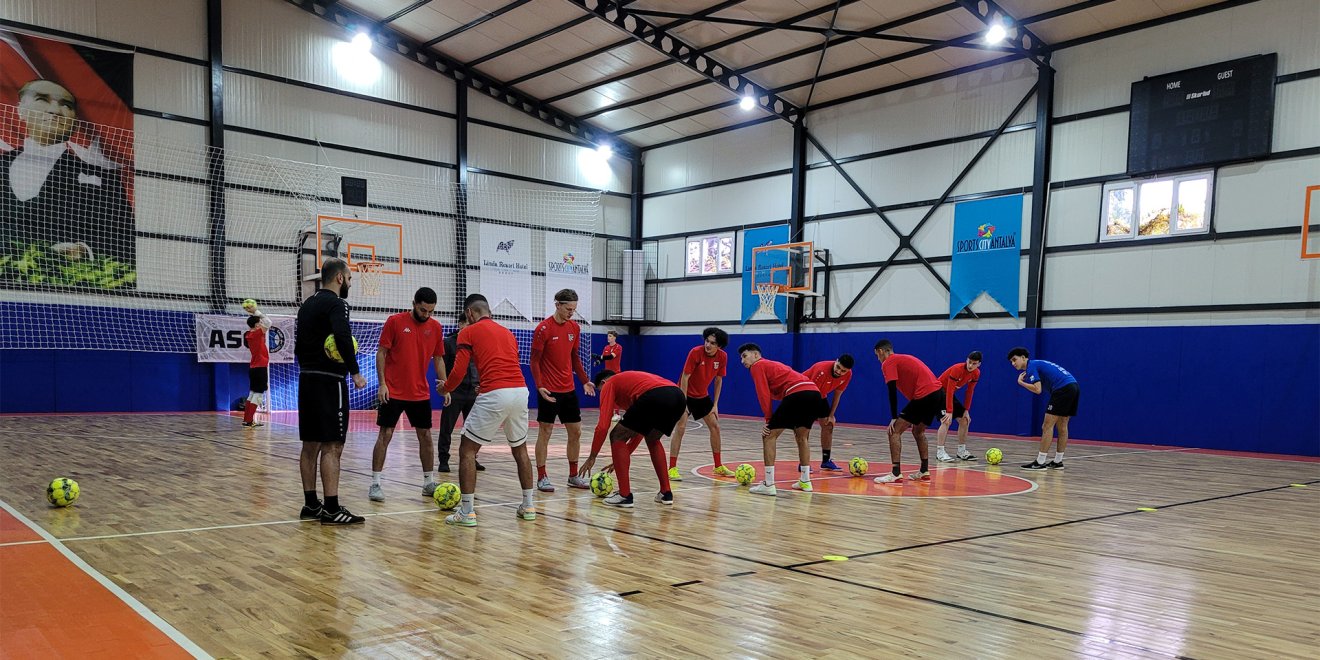
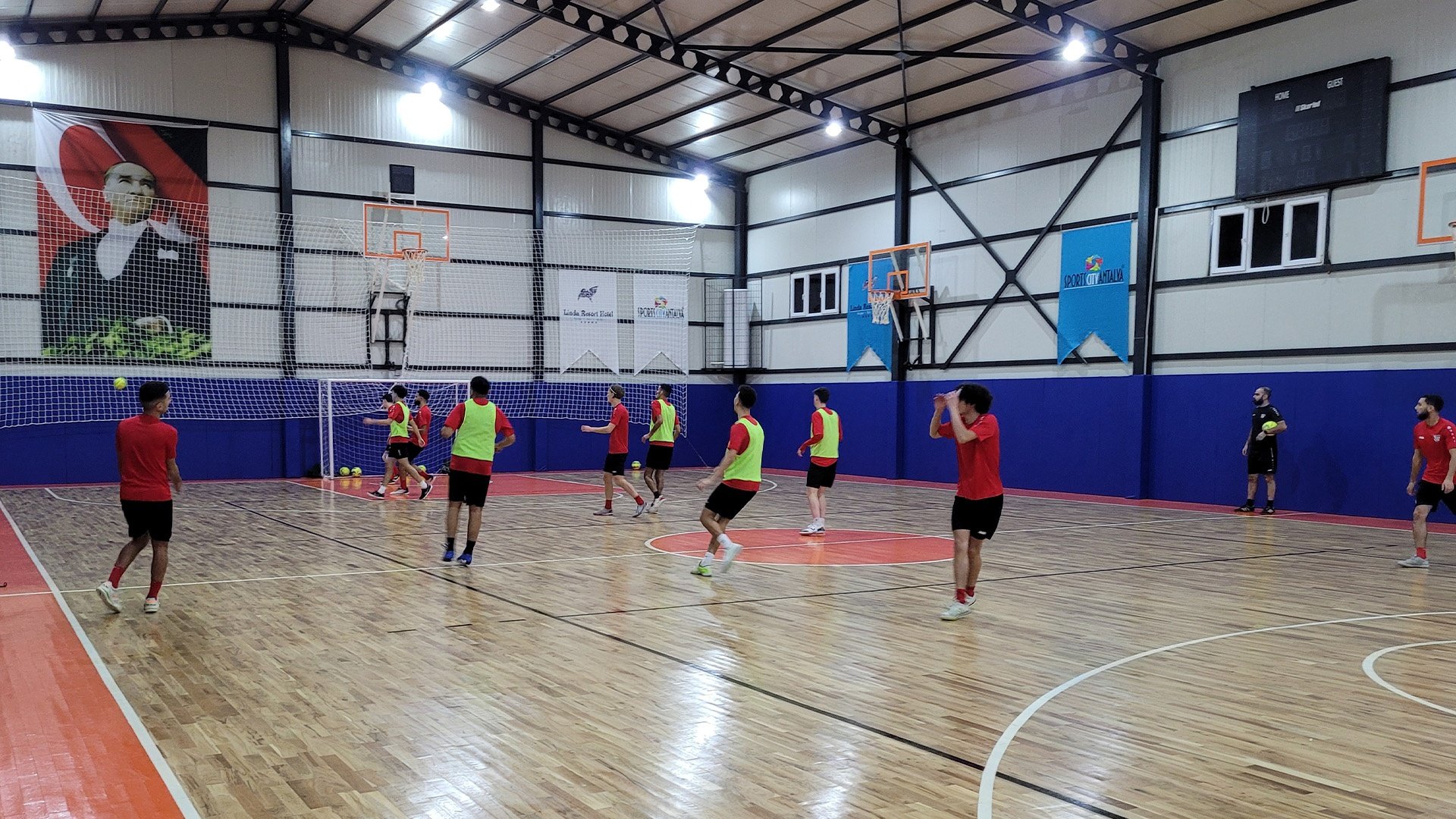
The SCA Sports Complex is a multi-purpose indoor sports venue in the Side region of Antalya, Türkiye. The hall can accommodate futsal training programmes as well as basketball, volleyball, badminton, gymnastics and other indoor activities.
Features of the SCA Sports Complex
- an indoor playing area measuring approximately 30 × 18 metres;
- a hall height of approximately nine metres;
- professional indoor lighting;
- a digital scoreboard;
- spectator seating;
- locker rooms and warm-up areas;
- ventilation and seasonal climate control;
- convenient access to nearby hotel accommodation.
Its location near accommodation can help clubs reduce unnecessary travel between the hotel and training venue. Teams can organise their training, recovery, meals and rest periods within a more efficient daily programme.
Who Can Use the Facility?
Sports City Antalya can assist professional teams, amateur clubs, youth academies, school teams, coaches, tournament organisers and private sports groups interested in:
- futsal training camps in Antalya;
- youth futsal development programmes;
- indoor football training sessions;
- friendly matches and team activities;
- indoor sports hall rental in Antalya;
- multi-sport camps and tournaments.
Camp arrangements may include facility planning, suitable accommodation, meals, transportation and additional training requirements according to the group’s programme and availability.
Plan a Futsal Camp in Antalya
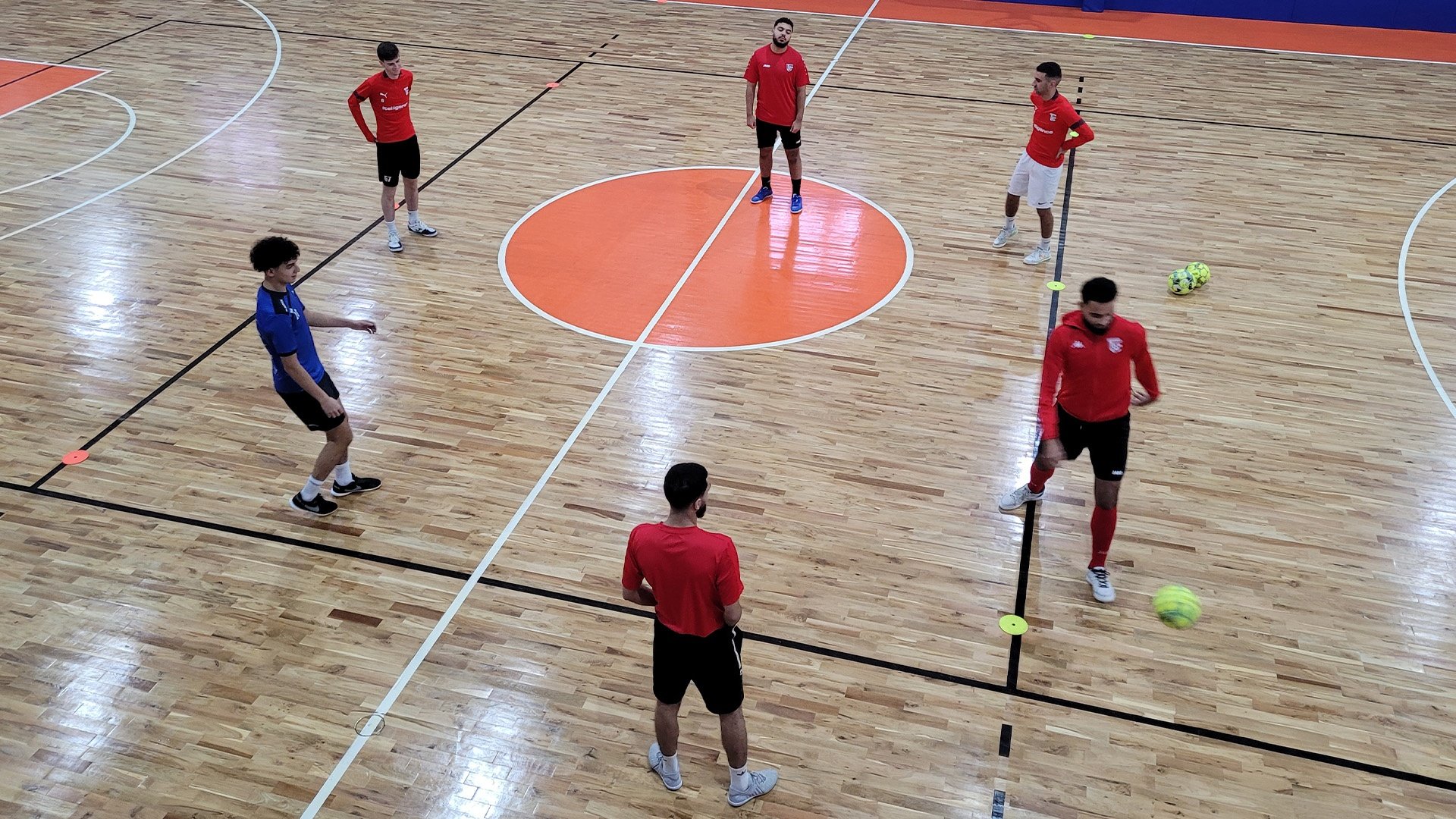
Sports City Antalya supports clubs, academies and organisers planning futsal camps and indoor sports programmes in Antalya.
Explore the SCA Sports Complex
Frequently Asked Questions About Futsal
Why is futsal important for football players?
Futsal gives players frequent involvement with the ball in a restricted area. It encourages faster decisions, closer control, precise passing, intelligent movement and improved awareness under pressure.
Does futsal improve football intelligence?
It can. Players must continually scan the court, recognise passing options, anticipate pressure and select an action within limited time and space. These repeated decisions can improve game understanding.
Is futsal good for children?
Futsal can be valuable for children when sessions are age-appropriate and properly supervised. It provides frequent ball contact, encourages creativity and teaches players to participate in both attack and defence.
How many players are on a futsal team?
Each team has five players on the court, including one goalkeeper. Futsal normally allows unlimited substitutions through the designated substitution area.
How long is a futsal match?
A standard senior match has two 20-minute periods of effective playing time. The clock stops when the ball is out of play or the referee interrupts the game.
What is the four-second rule in futsal?
Many restarts must be taken within four seconds after the team is ready and the official count begins. The rule helps maintain the speed and continuity of the game.
Can futsal skills transfer to eleven-a-side football?
Yes. Close control, scanning, short passing, movement, transition reactions and decision-making can transfer to outdoor football. Players still need specific preparation for the larger pitch and its physical and tactical demands.
Where can teams organise a futsal camp in Antalya?
Teams can contact Sports City Antalya regarding futsal camp organisation and use of the SCA Sports Complex in Side, Antalya. Facility use, accommodation and supporting services are subject to programme requirements and availability.
Conclusion
Futsal develops players by placing them in a fast, technical and demanding environment. Frequent ball involvement, restricted space and continuous transitions encourage better control, quicker decisions, creative solutions and intelligent movement.
For clubs and academies, futsal can be a valuable component of long-term player development. For teams planning a focused indoor programme, Sports City Antalya and the SCA Sports Complex offer a practical setting for futsal training camps in Antalya, Türkiye.
Visit www.sportscityantalya.com to request information about futsal camps, indoor sports hall rental and team training programmes in Antalya.